General Information
Essential information about Afghanistan, its geography, people, culture and practical considerations to help travellers prepare for their journey.
Afghanistan at a Glance
Key facts and figures about this fascinating countrty
Total Area
Population
Provinces
Highest Peak
(Noshaq)
Introducing Afghanistan
Afghanistan is a landlocked country at the crossroads of Central and South Asia. Its landscapes range from the Hindu Kush and high central valleys to northern plains, western deserts and the remote mountains of Badakhshan and the Wakhan Corridor.
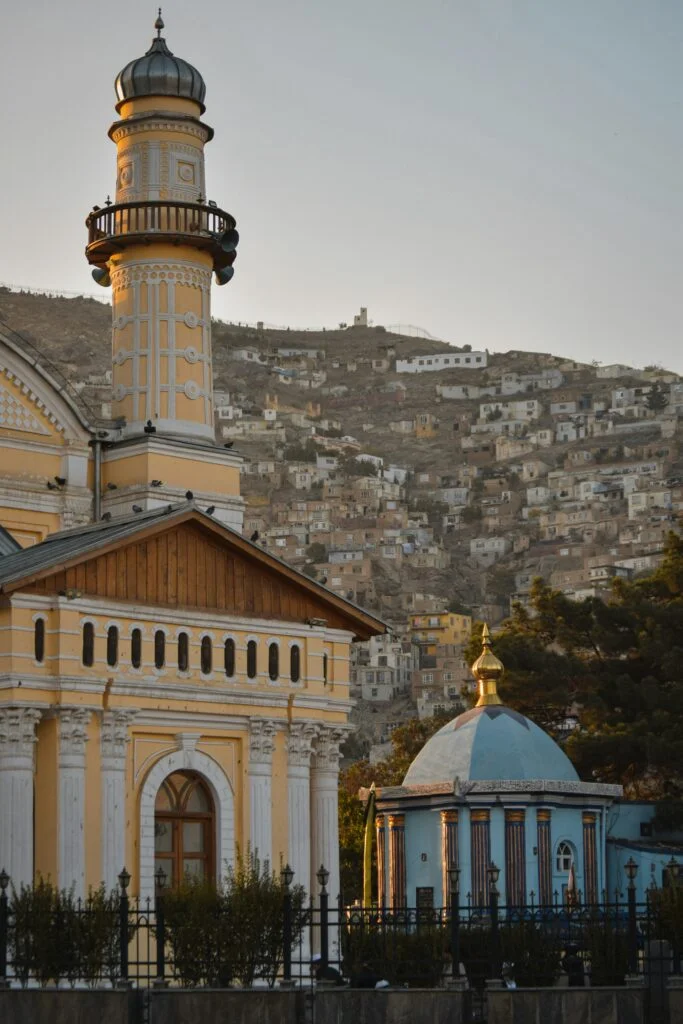
For centuries, routes through Afghanistan connected people, goods, beliefs and ideas across Asia. That long history can still be seen in ancient cities, Buddhist and Islamic heritage, traditional bazaars, regional crafts and the country's strong culture of hospitality.
Travel Advisory
Before planning your trip to Afghanistan, check your government's travel advisories and consult with local tour operators about current safety conditions. Responsible travel with proper preparation is essential.
Geography & Climate
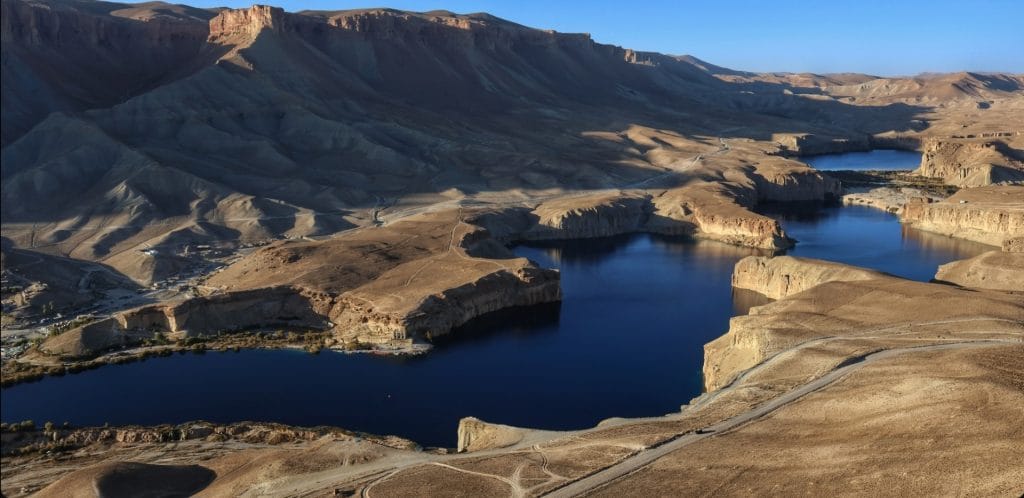
Afghanistan's diverse geographical landscape features mountain ranges, deserts, and river valleys.
Afghanistan has rugged mountains, broad valleys, northern plains and desert landscapes. The Hindu Kush dominates much of the country, while the far northeast reaches into the Pamir and Wakhan highlands.
Climate
Afghanistan's climate varies greatly by region and altitude. Lower areas can be very hot in summer, while highland regions remain cooler. Winters bring cold temperatures and snowfall, particularly in mountainous areas.
Best Time to Visit
Spring and autumn are generally the most comfortable seasons for cultural tours. Summer is especially suitable for higher-altitude destinations, while winter travel requires more flexibility due to weather and road conditions.
People, Languages & Culture
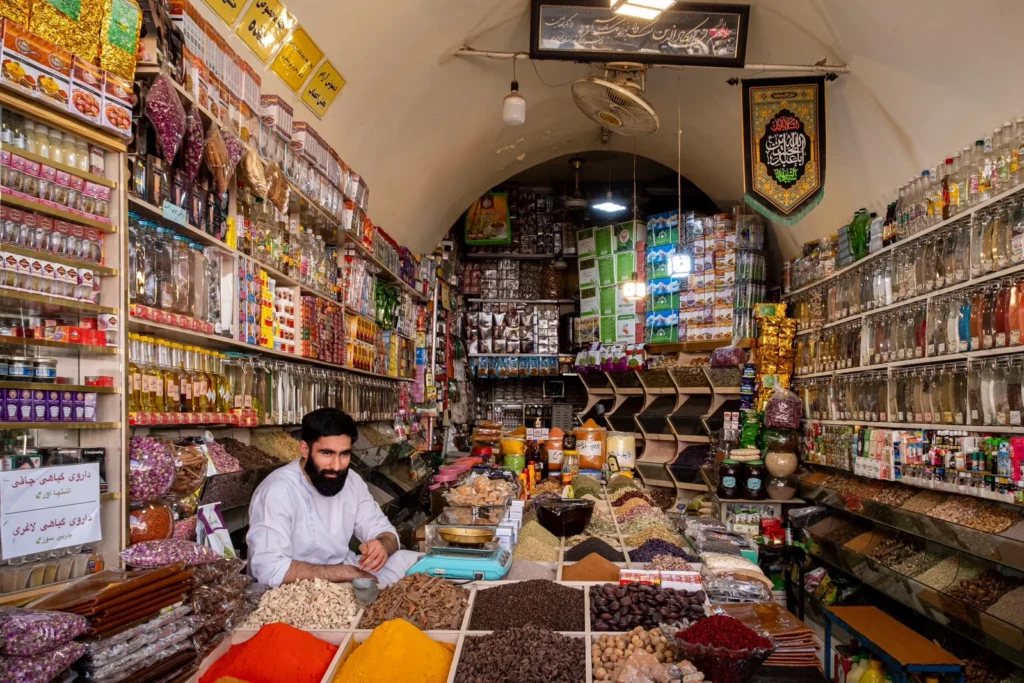
Afghanistan is home to many communities, including Pashtuns, Tajiks, Hazaras, Uzbeks, Turkmen, Aimaqs, Baloch, Nuristanis, Pamiri communities and others. Dari and Pashto are the country's main languages, alongside many regional languages. Family, hospitality and respect for guests are important parts of Afghan social life. Tea is commonly offered to visitors, and regional traditions can be seen in food, poetry, carpets, embroidery, music, architecture, markets and local dress. Customs can differ noticeably from one province to another.
Culture & Society
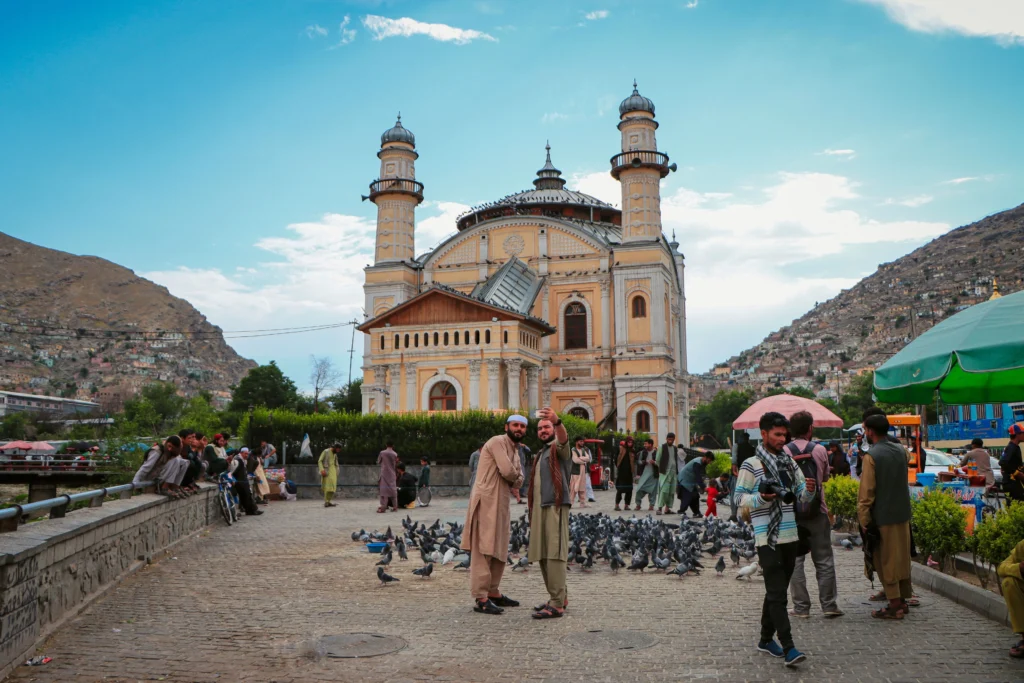
Afghan culture is rich in traditions, arts, music, and hospitality.
A sentence introducing the cultural traditions:
- Family Structure: Family is the cornerstone of Afghan society, with extended family networks providing social and economic support.
- Hospitality: Afghans are renowned for their exceptional hospitality (melmastia), considering it an honor to welcome guests.
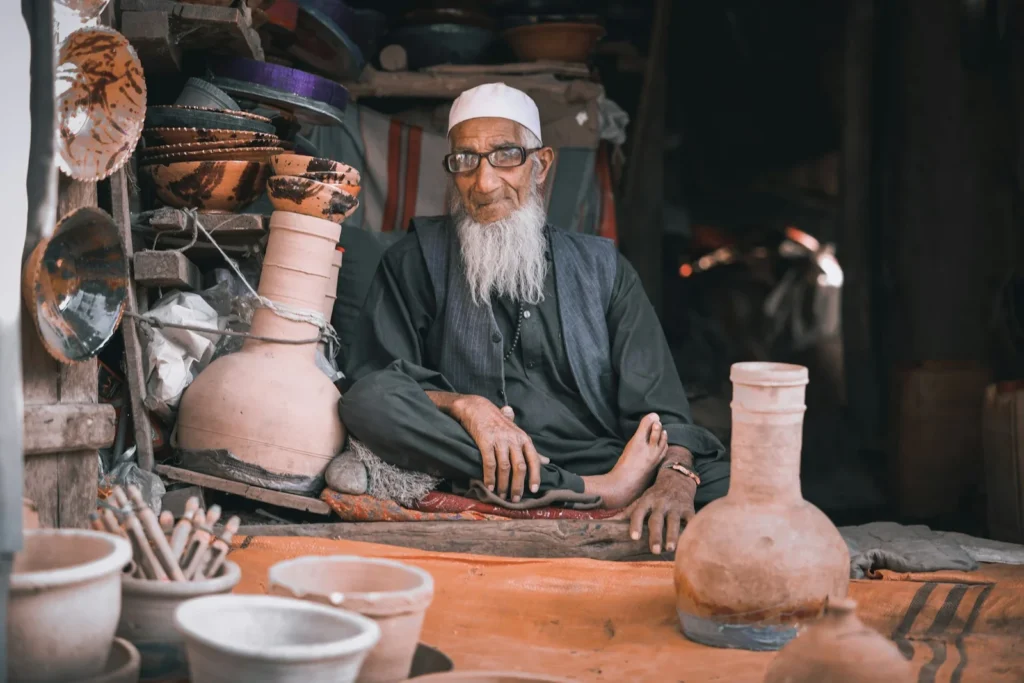
- Arts & Crafts: Afghanistan has a rich tradition of craftsmanship, including carpet weaving, pottery, jewelry-making, and miniature painting.
- Music: Traditional Afghan music uses instruments such as the rubab (stringed instrument), tabla (drums), and harmonium, though musical traditions vary by region and ethnic group.
- Literature: Afghanistan has a rich poetic tradition, particularly in Dari and Pashto, with famous poets like Rumi and Khushal Khan Khattak.
Clothing in Afghanistan
Traditional Afghan Men’s Clothing
Traditional men’s clothing commonly includes the perahan tunban: a long shirt worn with loose trousers. Waistcoats, turbans, pakol caps and other styles vary by region and community.
For male travellers: Long trousers and modest shirts are appropriate. Avoid shorts and sleeveless tops in public. Traditional Afghan clothing is welcome but is not required.
Afghan Women’s Clothing
Women’s clothing varies by region and setting. Traditional Afghan dresses can be colourful and embroidered, especially for family gatherings and celebrations. In public, modest outer clothing is common. A hijab refers to modest Islamic dress and is often used to describe a headscarf; an abaya is a loose outer garment; and the Afghan chadari or burqa is a full-body covering traditionally worn in some communities.
For female travellers: Wear loose, full-length clothing that covers the arms and legs and cover the hair with a headscarf. Current public dress rules also formally require face covering. Requirements and local practice can change, so travellers should reconfirm the current rules before arrival.
Cultural Etiquette & Photography
Afghans place great importance on hospitality, respect and local traditions. Visitors should keep a few things in mind when interacting with people and exploring the country.
- Dress and behaviour: Dress modestly and respect local customs, particularly in rural communities and religious places.
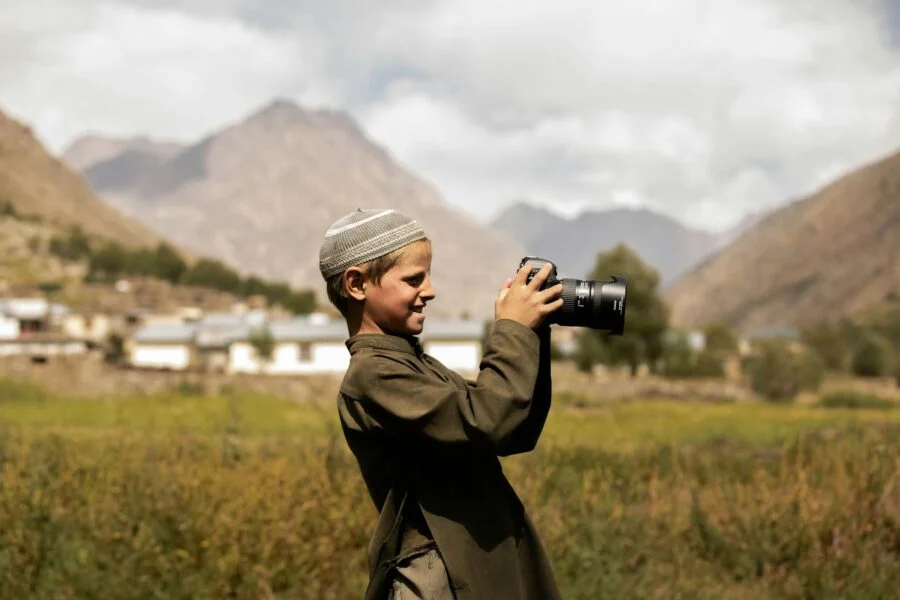
- Photographing people: Always ask permission before taking photos or videos of people, especially women, children and families. Not everyone is comfortable being photographed.
- Restricted areas: Avoid photographing or filming checkpoints, military personnel, security facilities and sensitive government buildings.
- Religious and historical sites: Some mosques, shrines and historical attractions may have photography restrictions. Ask before taking pictures.
- Entering homes and religious places: It is customary to remove your shoes before entering mosques and many Afghan homes. Follow local instructions when visiting shrines and other religious places.
- Drone photography: Drone use is restricted and requires official permission.
ATE Tip: If you’re unsure whether photography is allowed or how to behave at a particular place, ask your local guide or someone responsible for the location.
Brief History
Afghanistan's long and complex history has been shaped by its strategic location along ancient trade routes:
c. 2500 BCE
Ancient Civilizations
Early settlements and trade networks developed across the region, including areas linked with ancient Bactria and southern Afghanistan.
330 BCE
Alexander & the Hellenistic Period
Alexander the Great entered the region during his campaigns, followed by centuries of Greek and Hellenistic cultural influence.
1st–7th Centuries
Silk Road & Buddhist Period
Afghanistan became an important crossroads on Silk Road networks. Buddhism flourished in places such as Bamyan, alongside other religious and cultural traditions.
7th–10th Centuries
Spread of Islam & Islamic Dynasties
Islam spread gradually through the region. Powerful dynasties including the Ghaznavids and Ghurids later shaped major centres such as Ghazni, Herat and Ghor.
13th–14th Centuries
Mongol & Timurid Periods
Mongol invasions transformed many cities and regions. In the Timurid period, Herat became one of the great cultural and artistic centres of the region.
1747
Durrani Empire
Ahmad Shah Durrani established the Durrani Empire, commonly regarded as an important foundation of the modern Afghan state.
19th Century
The Great Game & Anglo-Afghan Wars
Afghanistan became a strategic buffer between the British and Russian empires. Two Anglo-Afghan wars were fought in the 19th century, followed by a third in 1919.
1919
Independence
Following the Third Anglo-Afghan War, Afghanistan gained full control over its foreign affairs under King Amanullah Khan.
Travel Permits
Foreign tourists travelling to Afghanistan’s provinces require official tourism coordination / travel-permit documentation in addition to their visa. The paperwork records the traveller’s details and itinerary, and provincial registration may also be required with local Information and Culture authorities.
Current commonly charged permit fee: 1,000 AFN per traveller, per province being visited
- Permit fees are separate from tourist-site entrance fees and other local charges.
- Procedures and guide requirements can change, so permits should be arranged before travelling.
- ATE can assist with travel permits, provincial registration and current route requirements.
Money & Payments
Afghanistan remains a largely cash-based destination for foreign travellers. The local currency is the Afghan Afghani (AFN), and cash should be carried for everyday purchases, especially outside major cities.
- ATMs and electronic payment services exist mainly in larger cities, but travellers should not rely on foreign cards as their only source of money.
- Carry enough cash before travelling to rural or remote areas where ATM access may be limited or unavailable.
- Keep smaller AFN notes for taxis, markets, small shops and everyday purchases.
SIM Cards & Internet
Local SIM cards and mobile internet are widely used in Afghanistan. Coverage is generally stronger in major cities and towns, but it can weaken considerably on rural roads, in mountain areas and in remote villages.
ATE recommendation: Do not assume one network will be best everywhere. Travellers visiting several provinces may find it useful to carry SIM cards from two different networks. ATE guides can advise which network is currently working best along the planned route.
Food & Drinking Water
Afghan cuisine commonly includes rice dishes, kebabs, bread, dumplings, soups, vegetables, yoghurt and tea. Food choices are broadest in major cities and become more limited in remote areas.
- Drink sealed bottled water or properly treated / filtered water.
- Tell ATE in advance about food allergies, vegetarian requirements or other dietary needs.
- Keep expectations flexible in remote areas, where menus and supplies can be limited.
Friday, Ramadan & Daily Life
Friday is Afghanistan’s main weekly holiday. Government offices, including offices involved in tourism paperwork, are generally closed on Friday. Saturday and Sunday are normal working days.
During Ramadan, government working hours, restaurant opening times and daily meal routines may change. Visitors should respect local fasting customs and plan administrative tasks accordingly.
Getting Around Afghanistan
Travel between Afghan cities is possible by private vehicle, shared taxis and minibuses, buses, and domestic flights. Journey times can vary because of road conditions, weather, traffic, checkpoints and mountain routes.
For detailed transport arrangements, private drivers, 4×4 services, airport transfers and route planning, use the ATE Travel Services / Transport page.
Domestic Flights
Domestic flights connect major Afghan cities, offering a faster alternative to long road journeys. Flight schedules and availability may vary.
Official airline websites: Kam Air | Ariana Afghan Airlines
Women Travellers
Women visiting Afghanistan should be aware of local customs and regulations, particularly regarding clothing and access to certain places. Requirements may vary by location and can change without notice.
- Clothing: Follow local dress requirements. See the clothing section above for general guidance.
- Travelling alone: Women travelling independently or with a local guide should check current travel requirements, as arrangements and restrictions may vary by destination.
- Visiting attractions: Some tourist attractions, parks and religious sites may have restrictions on female visitors. Access rules can change, so checking ahead is recommended.
ATE Travel Advice: Whether travelling independently or with a tour company, we recommend checking the latest information with reliable local contacts before arrival, especially regarding access to places you plan to visit.
Health & Medication
Pharmacies and basic medical services are available in major cities and many towns, but the choice of medicines and medical facilities becomes more limited in rural and remote areas.
- Bring enough prescription medication for the full trip and keep it in its original packaging.
- Do not rely on finding a specific medicine or brand in remote areas.
- Carry a small personal travel-health kit for long road journeys and remote routes.
Have a Question About Travelling in Afghanistan?
Can’t find the information you need? Contact the ATE team directly for current information about travel permits, routes, transport, local requirements and trip planning.
Message ATE on WhatsApp | Contact ATE
Quick Facts
Kabul
Approximately 43.8 million (2025 estimate)
Dari and Pashto
652,870 km²
Afghanistan Time (UTC+4:30)
+93
Afghan Afghani (AFN)
Ready to explore Afghanistan?
Book a tour with our experienced guides for an unforgettable journey.
Book a TourGlimpses of Afghanistan
A visual journey through the landscapes and cultural heritage